
Dear Friends,
2025 was a year of reflection and celebration for DefendDefenders and AfricanDefenders, as we marked 20 years of protecting human rights defenders(HRDs)across the East and Horn of Africa and the continent. In my traditional end-of-year message, I looked back on the milestone and our activities through the year and invited our valued partners to join me in reflecting on our shared work. [Click here] to know more about our year’s journey and the progress we’ve made together in ensuring a safer environment for human rights defenders (HRDs) across Africa.
Over the last four years, under our 2021–2025 Strategy, one of our four core thematic areas of focus has been women human rights defenders, we have shone a spotlight on the critical role of women human rights defenders (WHRDs) in advancing human rights in the East and Horn of Africa, while remaining alert to the gender-specific threats and violence they continue to face. Each year, between 25 November and 10 December, DefendDefenders actively participates in the global 16 Days of Activism Against Gender-Based Violence campaign, and this year was no different. In December, DefendDefenders and AfricanDefenders marked the end of the campaign under the global theme, “UNiTE to End Digital Violence Against All Women and Girls,” highlighting the digital space as a new frontline where WHRDs are increasingly exposed to threats and attacks, and underscoring that ending digital violence is both a technological necessity and a human rights imperative.
We also joined the global community in commemorating International Human Rights Defenders Day, observed annually on 9 December. This year marked 27 years since the adoption of the UN Declaration on Human Rights Defenders, the first instrument to recognise and legitimise the work of human rights defenders (HRDs). HRDs courageously speak out, advocate, and take action to uphold the rights of others, often at great personal risk. Specifically, we honoured the remarkable courage of various exiled HRDs, whose pursuit of justice has cost them their liberty and forced them into exile. I applaud their resilience and reaffirm our commitment to support them wherever their struggle for freedom takes them.
As we wrap up 2025, we will also be concluding our 2021–2025 strategy, Enhancing the Safety and Capacity of HRDs in the Region for Greater Resilience and the Effective Fulfilment of Their Mandates. I am delighted with the progress made in implementing this strategic plan, which has strengthened our ability to protect and promote the work of HRDs across the continent. Iextend my sincere appreciation to the entire DefendDefenders and AfricanDefenders team, whose commitment and hard work made this progress possible. As we enter the new year, we will start implementing our new 2026–2030 strategy, Beyond Resilience, which builds on our achievements and sets a bold direction for the years ahead.
Your continued partnership is vital as we prepare to tackle the challenges ahead and safeguard the future of HRDs in Africa. I extend my heartfelt appreciation to all our partners who ensure that human rights defenders can carry out their work safely and effectively.
I invite you to turn the pages.
Hassan Shire
Executive Director, DefendDefenders
Chairperson, AfricanDefenders
Human Rights Defender of the Month:Moses Mereto Mollel
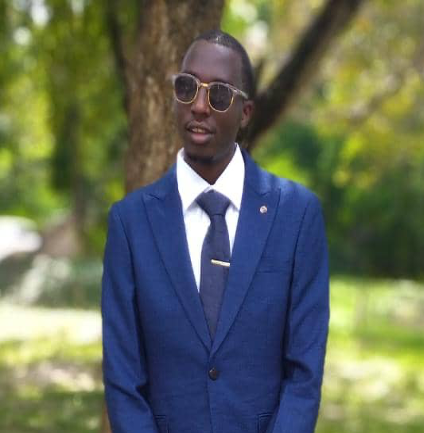
Moses Mereto Mollel is a human rights defender and disability rights advocate from Ngorongoro District in Tanzania’s Arusha Region. He currently heads the Disability Initiative Support Programme at the Ngorongoro Legal Aid Centre (NGOLAC), where he works to promote the rights, dignity, and inclusion of persons with disabilities within pastoralist and marginalised communities.
Moses became visually impaired at the age of eight in the year 2000 following a cancer-related condition and severe eye pressure that led to the loss of vision in both eyes. His disability was met with stigma and rejection, but with the support of his mother, caregivers, and faith-based institutions, he accessed education and later pursued higher learning. He holds a Bachelor’s Degree in Education from the University of Dar es Salaam.
“Since I began having problems with my right eye at the age of eight, my father was not supportive of my treatment. On the contrary, my mother gave everything she could to help me seek medical care. My illness eventually caused conflict and a rift in our family, as my father stopped my mother from taking me to the hospital and believed I should be left to die. My mother refused to obey his orders, and as a result, he separated from her.” — Moses Mereto
Updates from DefendDefenders
From 1–5 December 2025, DefendDefenders conducted a Ttaala cohort workshop in Moroto, bringing together 14 human rights defenders (HRDs) from seven organisations across Moroto, Kotido, Kaabong, Amudat, Abim, and Karenga. The workshop aimed to strengthen technical and strategic skills for effective human rights defence in the digital age, with a focus on online communication strategies, data literacy, data collection tools, and the implementation of online campaigns. This was the first in a series of two cohort workshops under the Ttaala initiative.
Between 8–12 December 2025, DefendDefenders conducted follow-up visits to ten (10) organisations in the Albertine region to assess progress in implementing security plans and identify areas for improvement, with the aim of strengthening resilience and sustained engagement among HRDs in the sub-regions. These visits built on earlier interventions, including a needs assessment conducted from 30 April to 4 May 2025, which identified emerging physical, digital, and organisational security challenges faced by HRDs and their organisations in the Albertine region. This assessment informed the Security Management (SM) training held from 30 June to 4 July 2025, focusing on physical and digital safety as well as organisational security planning.
On 5 December 2025, DefendDefenders joined a group of NGOs in drawing UN member states’ attention to the human rights situation in Tanzania. In a letter, 30 organisations suggested steps to address the crisis and post-election crackdown, involving the UN High Commissioner for Human Rights and the Human Rights Council.
On 9 December 2025, DefendDefenders and AfricanDefenders took part in the National Validation Meeting for the Second National Action Plan on elimination of Gender Based Violence in Uganda (NAP II EGBV), 2025/26 – 2030/31), which was developed to accelerate the operationalization of the National GBV Policy launched in 2016. NAP II EGBV builds on the progress registered under the implementation of NAP I EGBV considering the high prevalence rate of GBV and a big constraint to national growth and sustainable development. The cost of GBV to the economy is estimated at approximately USD 20 million annually (UNFPA, 2021). A safer, violence-free population would be actively engaged in household income generation and economic growth. It is further estimated that when the percentage of people subject to domestic violence declines by 1 percentage point, per capita economic activities increase by 8 percent (IMF, 2021).
On 11 December 2025, DefendDefenders and AfricanDefenders were a part of the National Human Rights Defenders Summit, which provided an opportunity for collective reflection on the dynamics currently shaping civic space in Mozambique. The meeting aimed to analyze, with sobriety and depth, the risks that affect fundamental freedoms, as well as the practices that support the defense of human rights in diverse contexts and provided direct knowledge of the concrete conditions under which the work is carried out. The contributions, presented with a clear sense of public responsibility, reinforced the importance of solidarity networks and the effective protection of HRDs in the field.
From 1- 31 December 2025, DefendDefenders’ emergency protection programme received and handled a total of 57 requests for emergency assistance from human rights defenders. 19 (33%) of these requests were responded to positively. 20 individuals indirectly benefited from the grants that were awarded to the human rights defenders. However, 19 (33%) requests were declined due to various reasons. 1 request was referred to other protection service providers, and 18 (32%) requests are still under the verification process.