

Hello Friends,
October was a significant month on the advocacy front. The 60th Session of the UN Human Rights Council (HRC60), which had begun on 7 September, came to an end on 8 October. For DefendDefenders, this was one of the busiest sessions to date. Led by our Geneva office, we supported and hosted delegations of human rights defenders (HRDs) from Sudan and Burundi and engaged with experts from the HRC and the African Commission on Human and Peoples’ Rights (ACHPR) within the framework of the “Addis Ababa Roadmap.” The session concluded with the adoption of resolutions on Sudan, Burundi, and Somalia; an important step for accountability and sustained international attention.
As HRC60 closed, our focus also turned to the unfolding democratic processes in Cameroon and Tanzania, both of which held elections in October. In Cameroon, delayed election results ignited tension and post-electoral violence, resulting in at least four deaths—an incident that underscored the fragility of democratic institutions and the shrinking civic space. In Tanzania, restrictive legislation and reprisals against journalists and opposition voices cast a shadow over the upcoming elections, raising serious concerns about the environment for free expression, the safety of HRDs, conditions at polling stations, and the subsequent reports of shutdowns and violence that followed polling day.
Amid the developments in both countries, the second public session of the year for the ACHPR85 was convened from 21 to 30 October. DefendDefenders and AfricanDefenders participated with a 14-member delegation. Our engagement highlighted the urgent need for stronger regional and international coordination to protect HRDs and safeguard democratic governance. The Session served as a crucial platform for dialogue, accountability, and collaboration among states, national human rights institutions, and civil society.
Ahead of the Commission session, part of our delegation attended the three-day NGO Forum, held under the African Union’s 2025 theme, “Justice for Africans and People of African Descent through Reparations.” The Forum featured insightful panel discussions and concluded with the adoption of country-specific resolutions addressing critical human rights concerns in the Democratic Republic of the Congo (DRC), Sudan, and Kenya, as well as a thematic resolution on shrinking civic space. These resolutions were submitted to the Commission for consideration during ACHPR85.
We were encouraged to see several key resolutions adopted, including the Resolution on Justice for Victims of Serious and Massive Human Rights Violations in the DRC, which calls for stronger protection and redress mechanisms for victims of violence in the eastern provinces. Additionally, the Commission approved the extension of the mandate of the Fact-Finding Mission on Sudan, reaffirming the urgent need for continued monitoring, documentation, and accountability for grave violations. The adoption of the Resolution on Supporting Citizen Election Observers and Strengthening Electoral Integrity in Africa further underscored the importance of safeguarding civic participation and protecting election monitors at a time when threats to democratic processes are sharply rising.
I invite you to turn the pages to catch up on our engagements throughout October.
Hassan Shire
Executive Director, DefendDefenders
Chairperson, AfricanDefenders
Human Rights Defender of the Month:Sulieman Mujuni Baitani
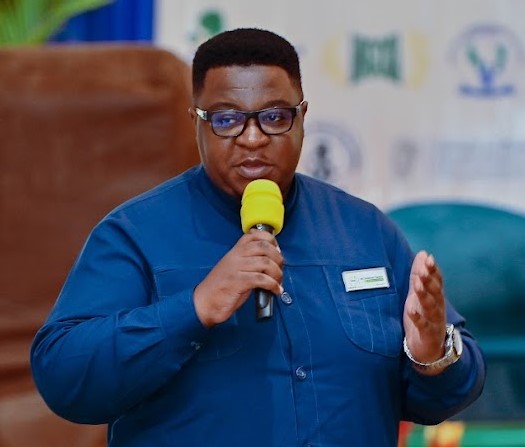
Sulieman Mujuni Baitani – Zanzibar National Coordinator | Tanzania Human Rights Defenders Coalition (THRDC)
Sulieman Mujuni Baitani is a committed human rights defender whose portfolio includes writing, political engagement, and civil society work. He has dedicated himself to amplifying marginalized voices and strengthening civic space in Zanzibar.
Sulieman Mujuni Baitani’s entry into civil society work started in 2013, fuelled by a simple yet steady love for writing that began during his university years around 2011. At first, writing was not a career ambition or a structured talent but a survival tool. “Writing helped me process questions I did not yet know how to voice,” he recalls. He wrote about fairness, responsibility, and the everyday frustrations that students carried but rarely expressed. Short reflections on leadership, identity, fear, and the emotional challenges that young people face gradually found their way onto early social media pages, into notebooks, and to close friends who encouraged him to keep going. Looking back, he says, “Those early writings were simple, but they carried a sincerity that people connected to.”
Updates from DefendDefenders
From 5 -10 October 2025, DefendDefenders organised a five-day Training of Trainers (ToT) on physical and digital security management in Jinja, Uganda. The workshop brought together 16 Sudanese HRDs who had previously participated in DefendDefenders’ basic safety training. The training aimed to strengthen the resilience and safety of Sudanese HRDs and develop a pool of skilled trainers capable of equipping both frontline and exiled HRDs with practical tools to identify, prevent, and respond to security risks in their work. By the end of the ToT, participants established a network of trainers dedicated to promoting safer human rights practices and strengthening protection mechanisms for HRDs at risk.
From 20- 24 October 2025, DefendDefenders conducted a refresher training on secure human rights work, monitoring, documentation, and reporting (MDR), and security management for four partner organisations in North Kivu and Ituri Provinces, in which a total of 11 HRDs participated. As part of the support, DefendDefenders provided these organisations with equipment, such as phones and laptops, to strengthen organisational and individual security. During the training, participants revisited and updated their data collection tools and security plans. The training aimed at enhancing the security and safety of human rights monitoring, documentation, and reporting (MDR) mechanisms in Eastern DRC.
From 6–10 October 2025, DefendDefenders held an advocacy training in Kampala, Uganda, for 16 human rights defenders (HRDs) from Ethiopia, the Democratic Republic of Congo, Kenya, Tanzania, Uganda, and Sudan. The five-day training aimed to strengthen their capacity to conduct strategic advocacy and effectively utilise national, regional, and international human rights mechanisms to advance their work and hold duty bearers accountable. It offered practical skills in drafting petitions and oral statements, engaging policymakers, and collecting and sharing evidence with mandate holders to support submissions before regional and international mechanisms.
On 9 October, AfricanDefenders participated in the 4th Africa Business and Human Rights Forum in Lusaka, Zambia. During the panel on Centering Human Rights, Justice and Equity in Energy Transition, organised by NANHRI and OHCHR-EARO, AfricanDefenders underscored the need for justice, safety, and accountability for Environmental Human Rights Defenders (EHRDs). The delegation emphasised the importance of institutionalising civil society participation in energy governance, domesticating regional instruments, and supporting a binding African treaty that guarantees access to information, participation, and protection for environmental defenders. They also highlighted the need for National Human Rights Institutions (NHRIs) to develop thematic reports and early warning mechanisms on risks faced by environmental defenders, going beyond traditional monitoring of rights impacts.
In the panel on Building Alliances for Justice in Africa’s Energy Transition, Regina Asinde, one of our four-person delegation, reflected on the roles of key stakeholders in promoting rights-respecting mineral governance. She highlighted the value of solidarity among HRDs, the importance of collaborating with NHRIs while acknowledging their operational limitations, and the need to safeguard their independence. Regina further underscored AfricanDefenders’ role in linking grassroots organisations to regional and international accountability mechanisms.
Prior to the above mentioned Forum, between 6–7 October 2025, AfricanDefenders also took part in the Conference on Safeguarding Human Rights and Environmental Justice in Energy Transitions in Africa, held on the sidelines of the Forum. Convened by OHCHR–EARO and Southern Africa Resource Watch, the conference focused on advancing the rights, safety, and legal protection of EHRDs, particularly Women Human Rights Defenders (WHRDs), in the context of Africa’s energy transition. AfricanDefenders contributed to two sessions that emphasised the protection and empowerment of HRDs.
In the first session, on the criminalisation and repression of HRDs, the delegation shared country perspectives from Uganda and Tanzania; highlighting gender-specific challenges, state interference in environmental advocacy in Uganda, and restrictive legislation and reprisals against HRDs working on Indigenous rights in Tanzania.
During the second session, Protecting the Frontlines: Tools, Strategies, and Solidarity, AfricanDefenders and DefendDefenders’ initiatives were spotlighted as key protection mechanisms. These included the emergency protection programme, the Ubuntu Hub Cities initiative offering tailored and flexible interventions for at-risk HRDs, and capacity-building programmes such as Safe Sister and Ttaala. The delegation also highlighted joint advocacy efforts to link EHRDs to regional and international human rights mechanisms, and visibility initiatives designed to counter negative public narratives targeting defenders.
From 18-20 October DefendDefenders and AfricanDefenders participated in the Forum on the Participation of NGOs preceding the 85th Ordinary Session of the African Commission on Human and Peoples’ Rights. The forum was held under the African Union’s 2025 theme, Justice for Africans and People of African Descent through Reparations. On day one of the forum, DefendDefenders and AfricanDefenders, urged the Secretariat to address civic space, media freedoms, and HRD protection, and called on parties to the Sudan conflict to allow unhindered humanitarian access while delivering our NGO Forum statement. After three days and 13 panel discussions, the forum adopted a resolution on shrinking civic space and three country-specific resolutions for the Democratic Republic of Congo, Sudan, and Kenya, and further recommended that the African Commission prioritise digital rights and the protection of vulnerable groups. These resolutions were submitted to the Commission for consideration during the Ordinary Session. DefendDefenders and AfricanDefenders went ahead to take part in the 85th Ordinary Session of the African Commission on Human and Peoples’ Rights(ACHPR85) from 21-30 October 2025. With a 14-member delegation, we delivered statements on the human rights situation in Africa and held 3 side events on the sidelines of the public session.
In October 2025, DefendDefenders’ emergency protection program received 38 requests for emergency assistance. 17 requests were positively responded to with the requested and appropriate emergency interventions. 38 individuals have indirectly benefited from the awarded assistance. 17 requests for assistance were not approved due to various reasons, such as organizational mandate limitations and verification concerns. 4 requests are still under the verification process.