
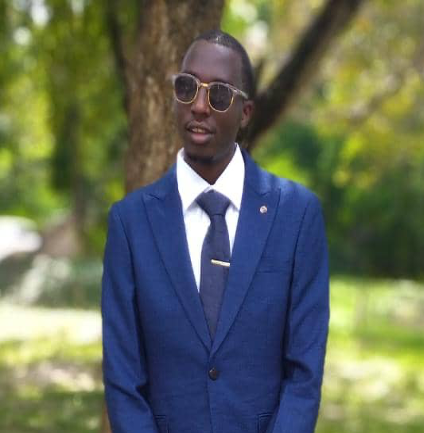
Moses Mereto Mollel is a human rights defender and disability rights advocate from Ngorongoro District in Tanzania’s Arusha Region. He currently heads the Disability Initiative Support Programme at the Ngorongoro Legal Aid Centre (NGOLAC), where he works to promote the rights, dignity, and inclusion of persons with disabilities within pastoralist and marginalised communities.
Moses became visually impaired at the age of eight in the year 2000 following a cancer-related condition and severe eye pressure that led to the loss of vision in both eyes. His disability was met with stigma and rejection, but with the support of his mother, caregivers, and faith-based institutions, he accessed education and later pursued higher learning. He holds a Bachelor’s Degree in Education from the University of Dar es Salaam.
“Since I began having problems with my right eye at the age of eight, my father was not supportive of my treatment. On the contrary, my mother gave everything she could to help me seek medical care. My illness eventually caused conflict and a rift in our family, as my father stopped my mother from taking me to the hospital and believed I should be left to die. My mother refused to obey his orders, and as a result, he separated from her.” — Moses Mereto
Motivated by his own lived experience of exclusion, Moses founded and now leads a grassroots disability rights movement under NGOLAC. Through community outreach, advocacy, and referral, he has supported more than 25 persons with disabilities, including children with visual, hearing, physical, and intellectual disabilities, as well as children with albinism, to access education, health services, and social protection.
Moses is also deeply engaged in challenging harmful cultural practices affecting girls and women in pastoralist communities, including early and forced marriage and female genital mutilation. Working with families, elders, and local leaders, he promotes rights-based approaches that centre dignity, consent, and education.
“I work to support marginalized and voiceless members of my community, especially girls and women. In my Maasai tribe, men traditionally hold all the power, and girls often face early marriages and harmful practices like female genital mutilation. I help them understand that everyone has the right to choose their partner and marry when they are ready. Since we began, I have supported 25 girls to continue their education, helping them gain confidence and shape their own futures.” – Moses Mereto
Moses uses music as a powerful advocacy tool, composing and performing songs that promote dignity, inclusion, and participation of persons with disabilities. His campaigns—such as Nishike Mkono (Hold My Hand), Kuwa Sauti ya Watu Wenye Ulemavu (Be the Voice of Persons with Disabilities), Utu Kwanza (Dignity First), and Nothing About Us Without Us—have reached wide audiences and contributed to national conversations on disability rights.
Despite operating with limited resources, minimal institutional support, and in remote, hard-to-reach areas, Moses continues to lead with determination. His work reflects a vision of a society where persons with disabilities and marginalised groups are recognised as equal citizens, able to participate fully, safely, and with dignity.
For Moses, defending human rights is not a profession—it is a lived mission shaped by survival, faith, and an unshakable belief that every person, regardless of ability, deserves respect, opportunity, and voice.