
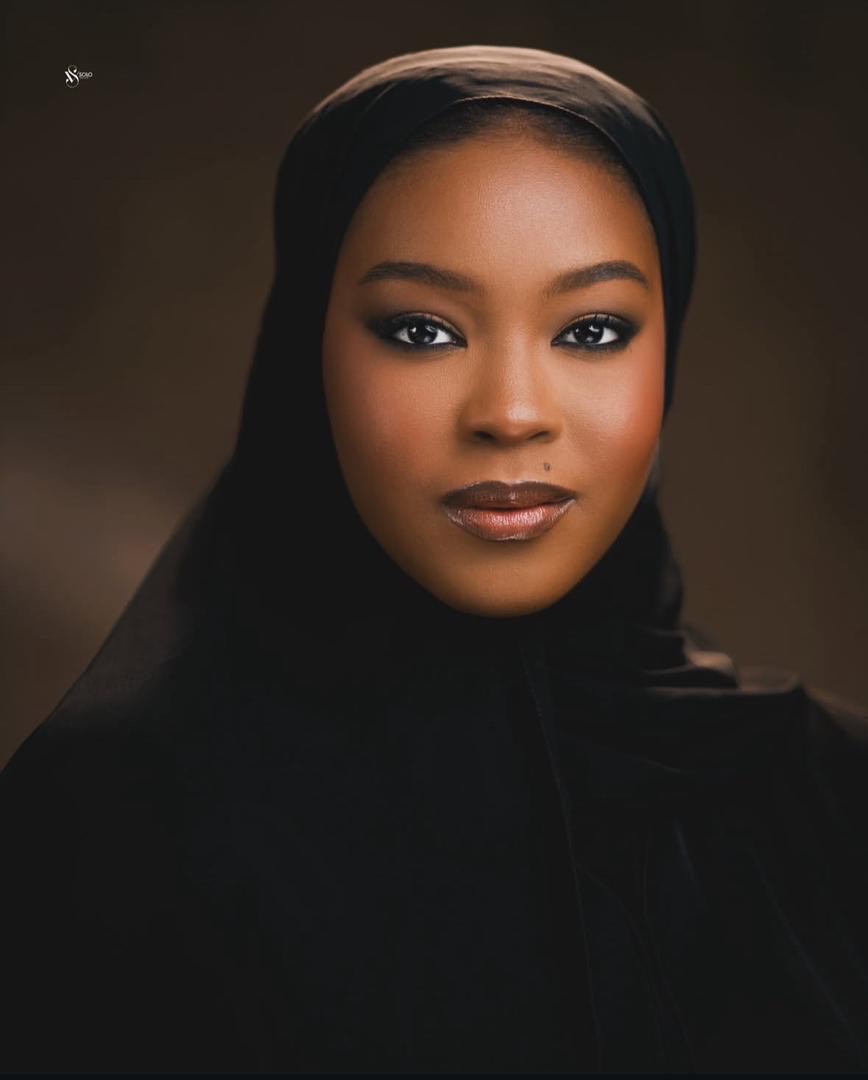
On the night of 14 April 2014, dozens of Boko Haram fighters stormed a girls’ school dormitory in Chibok, a small Christian enclave in northern Nigeria. 276 schoolgirls, most of them between the ages of 16 and 18, were forced at gunpoint into the forest after militants set the school ablaze. As the world woke up to the horror of the Chibok abductions, a ten-year-old Hadiza Malumfashi sat in front of the news, devastated and full of questions.
“How is it that terrorists can enter a school, pick up students, and nothing happens?” she recalls. “It was heartbreaking. I paused for a moment and said, how is that even possible? How is that possible? It lit a flame in me — this anger.”
That question stayed with her for years. By 2020, at just 16, Hadiza decided she could no longer remain silent. Using the Instagram following she had built through motivational videos, she recorded a message reminding Nigerians about how many years had gone by since the Chibok attack. She urged her audience to wear white in a collective call for peace.
” That video is still on my account,” she says. “A lot of them were saying ‘Peace in Nigeria, peace in Nigeria.’ And that was where it started from.”
The video went viral. “It has about 22,000 views — which I think is astronomical,” she says. “People kept reposting it.”
What began as instinctive activism soon became a structured commitment to justice. She further gained national attention with her online series “If I Were President,” launched during the COVID-19 pandemic to spark dialogue on youth-led solutions to Nigeria’s leadership challenges at the time.
Hadiza later went on to establish another initiative: Change Begins With Me. The idea emerged after she joined a student delegation to meet the Palestinian Ambassador to Nigeria in 2023. At the time, violence in Gaza had not yet escalated to the point that it is at today, but the ambassador called on youth advocates to help raise awareness on the situation then. Hadiza joined five other students in virtual strategy meetings.
“We spoke about how best we could use the Nigerian youth voice to champion the cause — to bring light to what was happening, especially to children in Palestine,” she explains.
She created a WhatsApp group to coordinate youth mobilisation, and it grew rapidly.
“It blew up — there were more than a thousand people discussing these issues,” she says. “And I realised we needed structure. Not just a support group or a community talking online, but an organisation that could make actual change.”
This was the birth of Change Begins With Me, a non profit organisation grounded in her belief that citizenship demands responsibility.
“I always knew the name had to be Change Begins With Me,” she says. “Because the change we desperately seek from the government requires that we have to play our part.”
For Hadiza, activism is not optional.
“We can’t afford to sit back and say we don’t care what happens anymore — it’s our future that’s being dangled,” she says. “The people in government now will be gone one day. But we will still be here, living with the consequences. We are the ones who will suffer if we don’t stand up and speak.”
For the first two years after creating Change Begins With Me, Hadiza insisted that the organisation remain entirely self-funded, grounded in her vision of peacebuilding, the spirit of ubuntu, and a commitment to key Sustainable Development Goals; particularly focus on Quality Education (SDG 4), Gender Equality (SDG 5), Clean Water & Sanitation (SDG 6), and Climate Action (SDG 13),
Between July 2023 and December 2024 her focus was on SDG 13 climate action.
“It’s getting hotter — and it is our fault,” she says. She and her volunteers realised that true advocacy required engaging people beyond social media. “We desensitised online to the best of our capacity, but the real people e-advocacy is meant for wouldn’t be on Instagram.”
So they went into villages.
House to house, they met with community members and village heads, “sitting down to explain the importance of climate change and why planting trees helps us all.” They didn’t simply distribute seedlings — they made sure families understood their value and took ownership of the process.
“We also started organising tree-planting exercises across different states,” she explains. The team conducted a small tour, planting trees in Abuja, Kaduna, Sokoto, and Yola. The goals were: environmental restoration and public education.
By December 2024, they had planted over 1,000 trees, including mango and guava seedlings.
In April 2025, Hadiza was appointed to host of one of Nigeria’s leading online political shows.
Her social media activism had caught the attention of an established media platform. “I can’t forget one of my videos where I was talking about jungle justice,” she recalls. “I had seen a comment from someone saying I should check my direct messages. When I did, it was a proposal for a meeting—they wanted me to join the Political Advantage Platform (PAP) show.” Impressed by the opportunity to amplify her voice on a larger platform while being supported and protected, Hadiza signed on.
The PAP show, initially launched in 2020 on YouTube, has grown to include broadcasts on Liberty TV (available on DStv and other stations), a radio podcast, and other outlets. With episodes airing every Sunday, Hadiza co-hosts alongside two others to balance her law studies while maintaining a weekly schedule. “The growth and response from the Nigerian community has been monumental,” she says. “The importance of that conversation became clear when we started providing uncut, unbiased truth—real accountability, not censored. Many news stations are affiliated with political parties, so this platform allowed us to ask the real questions and hold lawmakers accountable.”
Her campaigns and videos on social media were what initially brought her to the attention of the PAP show, marking a key step in amplifying her activism on a national stage.
Coming from Northern Nigeria and belonging to the conservative Hausa-Fulani community, Hadiza’s journey into human rights defending work has not been met with universal approval. While the tangible impact of her work continues to fuel her passion, she has also faced significant criticism rooted in cultural expectations about how women, especially Hausa-Fulani women, should behave. In a community where women are often expected to be timid, reserved, and soft-spoken, her bold, vocal stance on human rights was initially dismissed as a hobby and later condemned as improper. Some even warned her that no man would want “an advocate wife,” reflecting deep-seated stereotypes about outspoken women.
Despite this resistance, both from parts of her community and even within her family, Hadiza remains undeterred. With a supportive father and an unwavering sense of purpose, she has learned to rise above these voices. As she puts it, as long as her conscience is clear and her work serves the betterment of people, “Ninety-nine people can believe that what I’m doing is wrong, but if I know it is right — and their problem is simply stigma — I won’t care. I’ll keep pushing.”
Despite her determination, Hadiza’s work has not been without serious risks. As a young woman speaking out in Northern Nigeria, she has faced intimidation, threats, and even unlawful detention. In April 2025, she publicly exposed a well-connected young man involved in child pornography and the physical assault of underage girls—an issue the community had long ignored under the culture of “protecting their own.” Her exposé went viral, triggering widespread public attention but also severe backlash, particularly from the individual she had exposed, who initially reached out to her asking that she take down the post and offered to apologise to the victims. When she refused, the situation escalated: police officers began appearing outside her home, and anonymous individuals claiming to be from the Department of State Services (DSS), Nigeria’s secret service, threatened her. She was eventually summoned to a police station under the guise of providing a statement on 8th July 2025, but was detained for hours, pressured to incriminate herself, and held on allegations of criminal defamation. “He thought he could get away with anything because of his surname,” she recalls, “but my goal was to protect those girls, and I achieved it.” Through it all, Hadiza remained steadfast, refusing to be silenced by fear or intimidation.
Hadiza has also faced attempts at character assassination because of her activism. A male suitor she had rejected in secondary school resurfaced, circulating fake nude images claiming they were hers to discredit her and her work. Because he is the son of a prominent religious leader, the community rallied behind him, reviving old lies to undermine her credibility. Despite these attacks on her reputation, Hadiza remained steadfast, refusing to be silenced.
Currently in her third year pursuing a law degree, Hadiza sees her legal studies as deeply intertwined with her activism. From a young age, people often joked that her vocal advocacy and commitment to human rights meant she should become a lawyer. Over time, she realised that formal legal training would equip her with the knowledge, skills, and resources to defend vulnerable individuals more effectively. “Being a lawyer, having the ability to physically represent people, use the constitution to help those being oppressed — it’s my life purpose,” she explains. Despite facing health challenges that required regular medication and careful management, which initially made her parents hesitant about such a demanding field, Hadiza fought for her choice, independently enrolling in law school. She is driven by the belief that law is a powerful tool for advancing her advocacy and creating tangible change, particularly for girls and marginalized communities in Northern Nigeria and across the country.
21-year-old Hadiza is part of the wave of emerging human rights defenders, often referred to as Gen Z, sweeping across the African continent. “Just seeing them shows me how much this generation is not going to sit back,” she says. “It’s given me more drive to keep going because we might not know each other personally, but the fact that we’re all driven towards human rights defending—that itself is so powerful.” She reflects on the collective energy of this new generation: “There is so much power in that collective voice that I didn’t realize initially. It’s monumental and crucial.”
Hadiza hopes that her activism will extend beyond advocacy and translate into enforceable laws and policies that provide real protection and accountability for vulnerable communities. “I really hope to see permanent laws in place to protect certain things—laws around child rights, the Child Rights Act, stronger policies, stronger accountability,” she says.